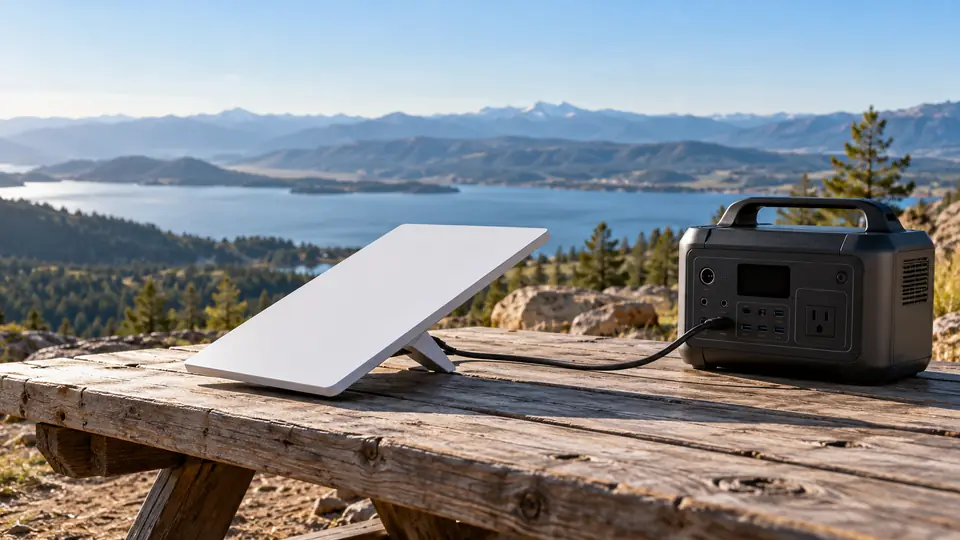
A Starlink Mini setup can look wonderfully simple until the power plan enters the picture. A standard USB-C bank may lack the right output path, an AC power station can waste energy through its inverter, and a 12V source may not provide the voltage the dish expects. Buyers searching for the best portable power station for Starlink Mini are usually trying to avoid those awkward little failures before they happen.
The key details are direct DC compatibility, rated battery capacity, pass-through behavior, charging method, portability, and weather protection. A claimed runtime is still a seller estimate, since network activity, temperature, cable losses, and device consumption affect actual use. Some buyers need an airline-friendly pack for short work sessions, while others want a larger LiFePO4 unit, a built-in stand, or enough spare output for a laptop. The ROVEDGE MK-1 is the strongest overall match in this group because it combines a 189Wh battery, dedicated 30V DC output, integrated tripod, and IP67-rated housing.
The comparison below puts those trade-offs in one place, including several larger battery kits and a couple of general-purpose power stations that may suit buyers who also need to run other electronics.
Quick Answer
- Best Overall: ROVEDGE MK-1 Portable Power Station for Starlink Mini for its 189Wh capacity, dedicated 30V DC output, integrated tripod, and IP67 enclosure.
- Best Higher-Capacity Kit: GENDOME StarGrid 288Wh Battery Pack for its LiFePO4 battery, carrying case, and USB-C PD support.
- Best Lightweight Option: PeakDo Starlink Mini Battery Pack for its listed 1.42-pound weight, 99Wh capacity, and tripod mounting point.
- Best for Direct-DC Efficiency: XTAR-Link MP158 Portable Power Bank for its stated 15V to 21V DC output and separated battery and antenna arrangement.
Best Portable Power Station For Starlink Mini Comparison Table
| Product | Best For | Capacity | Starlink-Relevant Output | Outdoor or Travel Feature |
|---|---|---|---|---|
| ROVEDGE MK-1 | Overall portable Starlink Mini use | 189Wh | 30V DC | Integrated tripod, IP67 housing |
| GENDOME StarGrid 288Wh | Higher-capacity kit with storage | 288Wh | DC output, DC-to-USB-C cable included | Custom-fit carrying case, LiFePO4 |
| PeakDo LinkPower 1 | Air travel and lightweight setups | 99Wh | DC output, USB-C PD up to 100W input | 1.42 lb listed weight, IP65 |
| UranGlyx Starlink Mini Battery | Tripod-based outdoor work | 166Wh | Starlink Mini power output, 65W USB-C PD | Integrated tripod, IP67 |
| XTAR-Link MP158 | Direct-DC portable connectivity | 158Wh | 15V to 21V DC | Airline-friendly claim, separated battery and antenna design |
| StarGrid 288Wh Power Station | Stand, case, and recharge flexibility | 288Wh | DC and USB-C output | Built-in stand, IP65, solar/car charging listed |
| Saunyoto Starlink Mini Battery | Starlink plus USB-C devices | 129Wh | 87W DC, two 65W USB-C PD ports | Built-in kickstand, 1/4-inch mount |
| BLUETTI Elite 10 Mini | Mixed electronics and AC backup | 128Wh | 200W AC outlet, multiple DC ports | Solar, car, and AC charging |
| Anker SOLIX C200 DC | USB-C-heavy travel kits | 192Wh | USB-C ports up to 140W | 100W solar input, LiFePO4 |
The detailed reviews explain which power path, capacity class, and physical design make the most sense for your Starlink Mini setup.
1. ROVEDGE MK-1 Portable Power Station for Starlink Mini – Best Overall

The ROVEDGE MK-1 is the most complete match for buyers who want a Starlink Mini power source and a usable outdoor stand in one piece. Its listed 189Wh battery sits above the airline-friendly 99Wh class, while the dedicated 30V DC output avoids relying on an AC inverter or an improvised voltage conversion path. The seller claims up to eight hours for Starlink Mini under typical conditions, but actual endurance will vary with network activity, weather, temperature, and the dish’s power demand.
Setup is refreshingly straightforward. Fold out the integrated tripod, place the unit where it has a suitable view and stable footing, then connect the included 30V cable. A physical switch handles basic power control, and the orange status ring shows charging and output activity without requiring an app. The IP67 rating applies when protective covers are fully closed, so exposed ports and cable connections still need sensible protection outdoors.
Pros
- 189Wh rated battery capacity.
- Dedicated 30V DC output for Starlink Mini.
- Integrated fold-out tripod reduces separate gear.
- IP67-rated housing when covers are closed.
- Pass-through charging through USB-C is listed.
Cons
- Starlink Mini is not included.
- The listing does not provide a verified real-world runtime.
This is the best fit for RV stops, outdoor work, and camping setups where direct power and a built-in support stand matter more than airline portability. Buyers who want the smallest carry-on battery should look at the 99Wh options instead. Before ordering, verify the Starlink Mini model and connector type against the included cable.
To buy this product, click here.
2. GENDOME StarGrid 288Wh Battery Pack for Starlink Mini – Best Higher-Capacity Kit

For buyers who want a longer off-grid session and a tidy way to transport everything, this GENDOME StarGrid kit brings together a 288Wh LiFePO4 battery, custom-fit case, DC cable, and DC-to-USB-C cable. The larger rated capacity gives it more energy on paper than the compact 99Wh packs, while the seller lists up to eight hours of Starlink Mini use. That figure is a published claim rather than a universal guarantee, so laptop charging, weather, and network conditions still belong in the planning.
The kit’s strongest everyday feature may be the case. Dedicated compartments are intended to hold the dish, battery, charger, cables, and solar accessories, which keeps a travel bag from turning into a nest of loose cords. USB-C PD supports up to 120W input and 100W output according to the listing, and pass-through operation allows the dish to remain powered while the battery recharges. The exact electrical behavior of every connected device should still be checked before combining loads.
Pros
- 288Wh rated capacity.
- LiFePO4 battery chemistry is specified.
- Custom-fit protective carrying case included.
- USB-C PD supports listed 120W input and 100W output.
- Pass-through charging is supported according to the listing.
Cons
- The published specifications do not clearly state the Starlink output voltage.
- The larger kit may be less convenient for airline travel than a 99Wh battery.
This version suits van life, RV travel, and remote work where organized storage and higher rated capacity matter. It is less compelling for a minimalist kit that only needs a few hours of connectivity. Verify the included cable path and Starlink Mini connector before treating the pack as a plug-and-play replacement for the original power arrangement.
To buy this product, click here.
3. PeakDo Starlink Mini Battery Pack LinkPower 1 – Best Lightweight Option
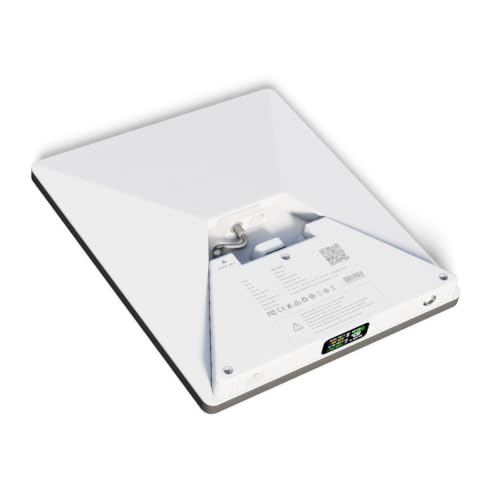
The PeakDo LinkPower 1 targets a very specific kind of Starlink Mini owner: someone who wants to keep the kit light, compact, and easy to mount. Its 99Wh battery is listed at 1.42 pounds, and the snap-on design is made specifically for Starlink Mini. A standard 1/4-inch screw hole also lets the battery and dish sit on a tripod, keeping the setup off wet ground, mud, or snow.
USB-C flexibility gives this small battery more utility than a single-purpose pack. The listing identifies bidirectional USB-C PD, up to 100W input after an app setting change, and up to 65W output for a laptop or phone. Pass-through charging can power the dish while the battery recharges through USB-C. The app adds remote monitoring and power control, while a physical switch remains available for the DC port, although buyers who dislike app setup may prefer the simpler ROVEDGE controls.
Pros
- Listed weight is 1.42 pounds.
- 99Wh capacity is identified as flight-approved by the seller.
- Custom snap-on design is made for Starlink Mini.
- USB-C input can reach a listed 100W maximum through the app.
- IP65 protection and a 1/4-inch tripod mount are specified.
Cons
- Runtime is listed as up to 4.5 hours, less than the larger packs.
- The 100W USB-C input requires an app setting according to the listing.
This is a smart choice for short remote work sessions, air travel planning, and backpack-friendly kits. It gives up capacity in exchange for low listed weight, so it is a poor match for all-day use with several additional devices. Check airline rules separately, since approval requirements can vary even for batteries within the stated capacity class.
To buy this product, click here.
4. UranGlyx Starlink Mini Battery Pack – Best Integrated Tripod Alternative

The UranGlyx combines a 166Wh battery with an adjustable tripod, making it a useful middle ground between a tiny travel battery and a larger storage-case station. The listing gives a weight of 2.2 pounds and says the stand can be deployed in about three seconds. That combination should appeal to remote workers who carry the dish from a vehicle to a temporary desk and do not want a separate support bracket taking up space.
A 65W USB-C PD port can charge a laptop, phone, or tablet while the Starlink Mini receives priority, with total output listed at up to 100W. The seller also describes pass-through charging and a full recharge in three hours with a 60W or higher PD charger, though charging time depends on the source and charge profile. Its IP67 rating and stated operating range of -4°F to 140°F add useful published outdoor information, but cables and open ports still need care.
Pros
- 166Wh rated capacity.
- Integrated adjustable tripod is included.
- Listed weight is 2.2 pounds.
- 65W USB-C PD output is specified.
- IP67 protection and a stated operating range are provided.
Cons
- The listing does not clearly state the Starlink DC output voltage.
- The claimed three-hour recharge depends on using a suitable 60W or higher PD charger.
Choose this model for a compact work setup that needs a stand and some extra capacity beyond the 99Wh class. Buyers who need a clearly specified 30V pathway may feel more comfortable with the ROVEDGE MK-1. Buyers who regularly charge several devices should also study the 100W total-output limit rather than adding port ratings together.
To buy this product, click here.
5. XTAR-Link MP158 Portable Power Bank for Starlink Mini – Best Direct-DC Design
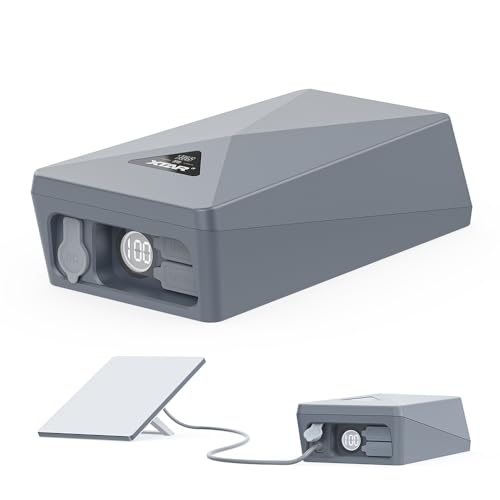
The XTAR-Link MP158 is built around the argument that a direct DC path can be preferable to powering Starlink Mini through an AC inverter. Its listed 158Wh capacity and 15V to 21V DC output are the most useful specifications here because they give buyers a concrete voltage range to compare with their dish and cable requirements. The seller claims up to eight hours of operation and more than 10 percent longer runtime than certain 12V arrangements, but those are product claims rather than independent measurements.
The separated battery and antenna design is unusual among these options. The battery can remain inside an RV or cabin while the Starlink Mini stays outside, which may help with physical placement in a vehicle-based setup. The unit also provides USB-C up to 100W and USB-A up to 18W for secondary devices. PD100W input is listed with a 2.3-hour recharge claim, while actual charge time can vary with the charger and charge taper.
Pros
- 158Wh rated capacity.
- 15V to 21V direct-DC output is specified.
- Battery and antenna can be positioned separately.
- USB-C output is listed at up to 100W.
- USB-A output and PD100W input add flexibility.
Cons
- The listing does not provide an IP weather-resistance rating.
- The stated eight-hour runtime is a seller claim that will vary with use.
This is a strong option for an RV or cabin arrangement where keeping the battery indoors and the dish outside is useful. It is less suited to buyers who want a built-in tripod or weather-rated enclosure. Confirm the supplied cable and the MP158 voltage range against the exact Starlink Mini input requirements before connecting it.
To buy this product, click here.
6. StarGrid 288Wh Portable Power Station with Stand and Carry Case – Best Stand and Case Package

This StarGrid package is aimed at buyers who want a larger battery with a stand, case, and several recharge paths. Its 288Wh LiFePO4 battery is listed with up to eight hours of Starlink Mini runtime, while the built-in stand keeps the physical arrangement cleaner than balancing a loose battery beside the dish. The package also includes a custom carrying case for the Starlink Mini, cables, and accessories, which is handy for RV travel or a mobile office.
Recharge flexibility is the headline feature. The listing says both the USB-C and DC ports support 60W input and output, with dual-port charging advertised at around 2.5 hours and single-port charging at around five hours. It also identifies solar and car charging, though the supplied information does not give the full solar voltage and current limits. That means buyers should verify panel compatibility rather than choosing a panel by connector shape alone.
Pros
- 288Wh rated capacity.
- LiFePO4 battery chemistry is specified.
- Built-in stand and custom carrying case are included.
- USB-C and DC charging paths are listed.
- Solar and car charging are identified as supported methods.
Cons
- The solar input voltage and current limits are not clearly supplied.
- The listing does not clearly identify the Starlink DC output voltage.
This package fits buyers who want organized storage and charging flexibility more than the smallest possible footprint. It overlaps with the GENDOME StarGrid option in capacity and case-oriented design, so compare the listed accessories and charging arrangement carefully. Do not assume any solar panel will work until the station’s electrical input limits are confirmed.
To buy this product, click here.
7. Saunyoto Starlink Mini Battery 129Wh – Best for Starlink and USB-C Devices

The Saunyoto pack is a useful bridge between a dedicated Starlink battery and a small multi-device hub. It lists 129Wh of capacity, an 87W DC output for Starlink Mini, and two USB-C PD ports rated at 65W each. For a remote worker, that means the dish can run while a laptop, tablet, or phone uses the other ports, although the published 200W combined-output claim should not be read as proof that every port can deliver its maximum simultaneously under every condition.
A foldable kickstand is built into the pack, and a 1/4-inch brass thread allows mounting on a tripod or camera support. The seller also describes pass-through charging with a wall adapter and a two-to-three-hour full recharge claim. Weather resistance is described for dust, splashes, and light rain, but the supplied information does not provide a formal IP rating, so this should not be treated like an IP65 or IP67 enclosure.
Pros
- 129Wh rated capacity.
- 87W DC output for Starlink Mini is specified.
- Two 65W USB-C PD ports are listed.
- Built-in kickstand and 1/4-inch mount are included.
- Pass-through charging is supported according to the listing.
Cons
- The listing describes weather resistance without providing a formal IP rating.
- Starlink Mini output and multiple-device output limits should be checked together before heavy simultaneous use.
This model makes sense for a laptop-and-connectivity setup where extra USB-C ports matter. It is less attractive for buyers seeking the longest listed runtime or a clearly rated waterproof housing. The included wall adapter and pass-through feature are convenient, but inspect the cable path and total load before starting a long video call outdoors.
To buy this product, click here.
8. BLUETTI Elite 10 Mini Portable Power Station – Best General-Purpose Alternative

The BLUETTI Elite 10 is a general-purpose mini power station rather than a Starlink Mini-specific battery. It offers 128Wh, a 200W AC outlet, a 100W USB-C port, and multiple DC ports. That variety can be valuable for a travel kit carrying cameras, laptops, lights, or networking gear alongside the dish. The important catch is that the supplied information does not establish exact Starlink Mini DC compatibility, so buyers should verify the required voltage, cable, and output path before purchase.
Its broader charging setup includes 150W AC charging, up to 100W solar charging, and 100W car charging according to the listing. A 10ms UPS is also specified for listed electronics, but that does not automatically prove suitability for Starlink Mini or every network device. The unit weighs 3.97 pounds and measures 7.87 by 5.75 by 4.33 inches, while Bluetooth monitoring and built-in lighting add convenience for general travel.
Pros
- 128Wh rated capacity.
- 200W AC outlet is specified.
- 100W USB-C output is listed.
- AC, solar, and car charging methods are identified.
- 10ms UPS and built-in lighting are listed for general electronics.
Cons
- It is not presented as a Starlink Mini-specific power pack.
- Exact Starlink Mini output compatibility is not clearly supplied.
Choose the Elite 10 if Starlink Mini is only one part of a wider electronics kit and AC power is useful. A dedicated direct-DC battery is a cleaner choice for buyers focused purely on the dish. Treat the UPS feature as a general electronics specification, not as a guarantee of uninterrupted Starlink operation.
To buy this product, click here.
9. Anker SOLIX C200 DC Portable Power Station – Best for USB-C-Centered Kits

The Anker SOLIX C200 DC brings a 192Wh LiFePO4 battery and a strong USB-C selection to the comparison. Its listed ports include a 140W two-way USB-C port, a 100W USB-C port, a 15W USB-C port, and two 12W USB-A ports. That makes it appealing for buyers carrying a modern laptop and several small devices, though the product data does not establish direct Starlink Mini compatibility or provide a dedicated 30V output.
Solar and car charging are listed alongside USB-C recharge, with up to 100W solar input and a claim of reaching 80 percent in 1.3 hours through the 140W USB-C PD 3.1 port. Solar panels are not included, and the listing names specific Anker panel compatibility while excluding several other Anker models. The 3,000-cycle LFP claim and three-year warranty are published specifications, not a promise of a particular service life in every operating environment.
Pros
- 192Wh rated capacity.
- LiFePO4 battery chemistry and a 3,000-cycle claim are specified.
- 140W two-way USB-C port is listed.
- Up to 100W solar input is identified.
- Three charging methods and a three-year warranty are listed.
Cons
- It is not a Starlink Mini-specific battery pack.
- The supplied information does not confirm the voltage and cable path needed for Starlink Mini.
The C200 is a sensible alternative for a USB-C-heavy travel kit where the Starlink Mini can be powered through a separately verified compatible pathway. It is a weaker choice for buyers who want a ready-to-connect direct-DC Starlink solution. Check the station’s output requirements and cable arrangement before relying on it for remote connectivity.
To buy this product, click here.
Buying Guide
Start With the Starlink Mini Power Path
The most useful distinction in this category is dedicated DC output versus general-purpose AC or USB-C power. The ROVEDGE listing specifies 30V DC, while the XTAR-Link lists a 15V to 21V DC range. Those details give you something concrete to compare with the Starlink Mini’s required input arrangement. A USB-C connector alone proves very little, and an AC outlet still requires the correct Starlink adapter and cable path.
Read the included-cable information carefully. A battery may advertise a Starlink-specific design while still requiring a particular cable or connector. If the listing does not clearly state the output voltage or protocol, treat compatibility as something to verify rather than something guaranteed by the product title.
Understand Wh, Ah, and Runtime Claims
Wh is the useful comparison unit for battery energy. Ah figures need a voltage context before they can be compared fairly, which is why a 90,000mAh headline should not be treated as automatically superior to every smaller-looking number. A 288Wh battery has a higher rated energy figure than a 99Wh pack, but the energy delivered to the dish depends on the output path, conversion losses, idle consumption, temperature, and battery cutoffs.
Published runtime claims are useful for rough product positioning, not guarantees. The listings describe runtimes such as four and a half, six, or eight hours under stated or typical conditions. Starlink activity changes, and a laptop or phone connected at the same time adds another load. Plan with room for variation rather than treating the headline number as a scheduled appointment.
Choose Capacity Around the Trip
A 99Wh battery can be appealing for airline-oriented travel, shorter work sessions, and low carried weight. The PeakDo pack is listed at 1.42 pounds, while the Saunyoto 129Wh model and XTAR 158Wh model sit between the smallest packs and the larger 288Wh kits. Larger batteries are more suitable for extended vehicle travel, but capacity usually brings extra bulk or a more involved carrying setup.
Ask how the kit will move from storage to operating position. An integrated tripod, kickstand, or custom case can matter more than another small increment of capacity if the dish is deployed frequently. The ROVEDGE, UranGlyx, and StarGrid options reduce the need for separate support equipment, while the XTAR design prioritizes keeping the battery and antenna apart.
Check Pass-Through Carefully
Several products list pass-through charging, which means the battery can charge while powering another device. That feature is useful beside an RV outlet or during a long remote-work session. It does not automatically mean the unit is a UPS, and it does not prove zero-interruption operation when the charging source is removed.
If uninterrupted connectivity matters, check the specific switching behavior and the Starlink Mini’s tolerance for any brief power change. A seller’s pass-through statement should not be expanded into a universal UPS promise.
Match Solar and Car Charging Electrically
Solar input can be useful for a multi-day trip, but panel wattage alone does not certify compatibility. The StarGrid listing mentions solar charging without supplying all voltage and current limits in the available information. The Anker listing gives a 100W solar input and names compatible panel families, while also identifying several incompatible Anker models.
Before connecting a panel, compare the station’s maximum input voltage, current, wattage, connector, and panel electrical specifications. A connector that fits can still be electrically wrong. The same caution applies to car charging and DC adapters.
Separate Weather Ratings From Cable Safety
IP65 and IP67 ratings belong to specific product housings and conditions. The ROVEDGE and UranGlyx listings identify IP67, the PeakDo and StarGrid listings identify IP65, and the Saunyoto listing describes weather resistance without providing a formal IP rating. These descriptions should not be generalized to open ports, cables, or the entire Starlink system.
Keep connections protected, close port covers when the product is stored, and follow the supplied instructions. A weather-rated battery does not make every connected component suitable for rain or standing water.
Best Portable Power Station For Starlink Mini FAQ
What is the best portable power station for Starlink Mini?
The ROVEDGE MK-1 is the strongest overall option in this selection because its listing specifies a 189Wh battery, dedicated 30V DC output, integrated tripod, pass-through charging, and an IP67-rated enclosure when covers are closed. Confirm the connector and exact Starlink Mini model before ordering.
Can a regular portable power station run Starlink Mini?
It may, but the product must provide a compatible output voltage and cable path. An AC outlet, USB-C port, or 12V port by itself does not prove compatibility. General stations such as the BLUETTI Elite 10 and Anker SOLIX C200 should be checked against the Starlink Mini requirements before use.
How much battery capacity does Starlink Mini need?
There is no single capacity that fits every session. The products in this roundup range from 99Wh to 288Wh, with seller runtime claims varying by model. A smaller pack can suit short trips, while a larger battery gives more rated energy for extended use. Actual runtime also changes with network activity, temperature, conversion losses, and connected devices.
Is a 99Wh Starlink Mini battery allowed on an airplane?
Several listings describe their 99Wh products as airline-friendly or flight-approved, but airline policies and approval requirements can vary. Check the current rules of the specific airline before travel. The product’s stated capacity does not replace the airline’s own decision.
Is pass-through charging the same as a UPS?
No. Pass-through charging means the battery can power a load while it receives charge under the listed conditions. UPS behavior involves a defined transfer function and timing. A pass-through claim should not be treated as proof that Starlink Mini or another network device will remain connected during every source change.
Can I use a solar panel with these Starlink Mini batteries?
Only after checking the electrical specifications. The StarGrid and Anker listings identify solar charging, but the required voltage, current, connector, and input limits must match the panel and station. Panel wattage or connector fit alone is not enough to certify compatibility.
Are LiFePO4 batteries better for Starlink Mini?
LiFePO4 is a battery chemistry specified for several products here, including the GENDOME StarGrid, StarGrid 288Wh, and Anker SOLIX C200. Chemistry can be one useful selection factor, but it does not by itself prove that a battery has the correct output, runtime, weather protection, or overall durability for your setup.
Final Verdict
The ROVEDGE MK-1 is the best overall pick for this specific use because it connects the practical pieces most Starlink Mini owners need: a 189Wh rated battery, dedicated 30V DC output, an integrated tripod, pass-through charging, and a stated IP67 housing rating with the covers closed. Its published runtime remains a claim rather than a guaranteed result, but its output path is clearer than the general-purpose stations in this group.
For longer vehicle-based trips, the 288Wh GENDOME StarGrid and StarGrid stand-and-case package offer more rated capacity and organized storage. The PeakDo is the better lightweight direction, while the XTAR-Link MP158 makes sense for buyers who value a specified direct-DC range and separated battery placement. The BLUETTI Elite 10 and Anker SOLIX C200 are broader electronics stations, but their Starlink Mini compatibility requires extra verification. Match the battery to your travel method, confirm the connector and voltage, and treat every runtime figure as an estimate rather than a promise.
